Summary
Deck-buildingis arguably one of the most popular game mechanics in modern games, especially among indie titles on Steam. Deck-building roguelites, in particular, continue to be popular, even long after the release ofSlay the Spire, a game that arguably injected deck-building into the indie game mainstream.
Once players have learned to play one deck-builder, the chances are that they can play the majority of the rest. However, some deck-builders, even the genre pioneers themselves, can offer a real challenge to newcomers and veterans alike.

Updated on June 08, 2025, by Harry Ted Sprinks:While its popularity may have slowed down in the years following Slay the Spire’s release, the deck-building genre is still alive and kicking. This is in large part thanks to the success of games such as Balatro, which has renewed popularity in the genre with innovative gameplay. Many of these newer deck-builders, such as Beneath Oresa, are particularly challenging. Much of the difficulty of these newer titles comes from their innovations in the genre, which provide twists on the conventional gameplay of deck-builders, encouraging players to approach the game in new ways.
Balatrois a rogue-like deck-builder based on poker hands and, as a result, is inherentlyreliant on randomness. Because of this,Balatrocan feel a little unfair at times, and it is often quite challenging. The luck of the draw can and will frequently end runs that were otherwise going well, though there are several tools at the player’s disposal to stack the odds in their favor.

Balatroalso has several difficulty modes and a variety of starting decks, each of which brings its own unique challenges to overcome. Furthermore,Balatrofeatures several challenge runs that provide further difficulty once players have mastered the base game.
Thiscozy farming gameis a roguelike deck-builder that tasks players with drafting farm-themed cards.Crop Rotationplays cards automatically, allowing players to focus on the deck-building, which is the core ofCrop Rotation’s gameplay.

WhileCrop Rotationhasa minimalist visual styleand gameplay structure, the depth and complexity of its systems and user interface make it a relatively inaccessible deck-builder. In comparison to drafting games such asLuck Be A Landlord,Crop Rotationoffers a much more challenging experience, at least at first.
This tremendously unique roguelite deck-builder takes the traditional structure and gameplay of the genre and adds several small tweaks. Each of these minor changes adds toVault of the Void’s complexity and heightens its skill ceiling.

InVault of the Void, unlike most deck-builders, players manage a deck of twenty cards at all times. When players gain new cards, they can freely switch them in and out of their current deck, allowing for constant freedom and flexibility. This alone adds a subtle layer of complexity toVault of the Void, but when combined with the game’s multitude of status effects, quirky damage system, and abundance of gameplay quirks,Vault of the Voidis a distinctive and challenging experience for newcomers.
5Beneath Oresa
A Unique 3D Deck-Builder That Places A Focus On Positioning
This heavily stylized rogue-like deck-builder takes place in a unique setting and combines traditional deck-building withturn-based tactics. Thanks to the game’s 3D battle arenas, players will have to worry about the positioning of their characters throughout each battle, adding an extra layer of complexity to the game.
There are a variety of strategies to be developed inBeneath Oresa, thanks in large part to the multiple upgrade paths of each card, as well as the variety of companions. Overall,Beneath Oresaoffers a unique and challenging experience, but its rough-edged difficulty curve won’t be for everyone.
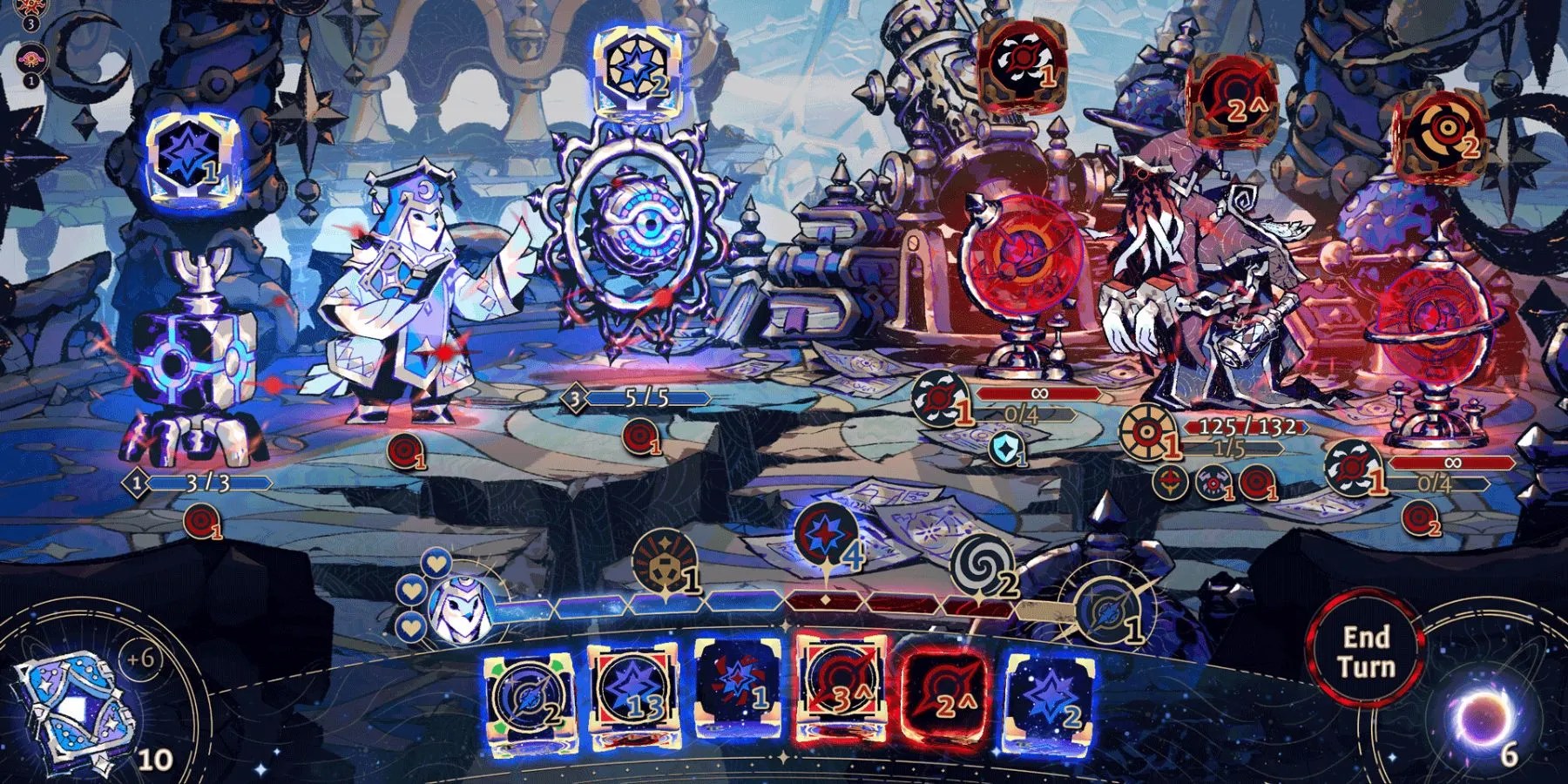
AlthoughAstreatasks playerswith playing dicerather than physical cards, deck-building remains a core part of its gameplay loop. In order to succeed, players will have to strategically build and manipulate a deck of dice, creating synergies and powerful combos.
Astreaalso features a unique health bar system that grants players skills as they take damage. These skills refresh when the player heals, allowing them to exploit these skills by repeatedly dealing damage to themselves. This focus on risk and reward gameplay is what makesAstreaso satisfyingly difficult.

This innovative roguelike deckbuilder features acute and colorful art styleand unique gameplay that helps to distinguish it from its many contemporaries.Wildfrosttasks players with building a deck and navigating a node-based map, but combat revolves around playing and buffing various companion cards.
These companion cards can be moved around during combat, adding a layer of tactical decision-making toWildfrostthat breathes new life into the genre. This added layer also adds complexity and challenge toWildfrost, making it one of the more difficult deck-builders on the market.

It could be argued thatSlay the Spirerevolutionized the deck-building genre, taking inspiration fromiconic tabletop gamessuch asDominion. Despite its immense popularity,Slay the Spirecan be quite difficult, thanks in large part to its “Ascension” system.
While beating a vanilla run ofSlay the Spiremay be relatively easy, especially for those familiar with the deck-building genre, the game’s variety of extra difficulty modifiers do a great job of adding challenge to the experience. Furthermore, this difficulty ladder allows the game to have a higher replay value than it otherwise would.

This action roguelite deck-builder features chaotic real-time action gameplay that takes clearinspiration fromMega Man Battle Network.One Step From Edencombines its real-time action with strong deck-building mechanics packed with plenty of potential synergies.
One Step From Edencan be ridiculously difficult, asplayers will have to dodge attacks, fire their weapons, and play their cards simultaneously. This constant multitasking won’t be for everyone, and while it’s largely responsible for makingOne Step From Edenso inaccessible, it’s also what makes it so satisfying to play.
